NH voters decide Senate, governor amid tight national House race
With polls open across the state, Manchester and Nashua residents weigh local choices against a national House battle decided by a three-seat margin.
By Bianca Herrera ·
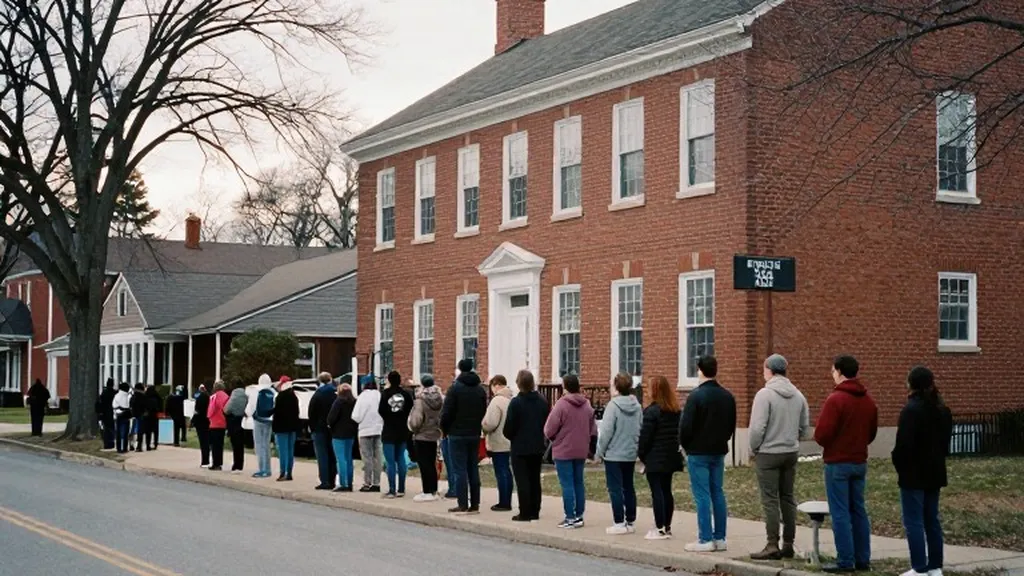
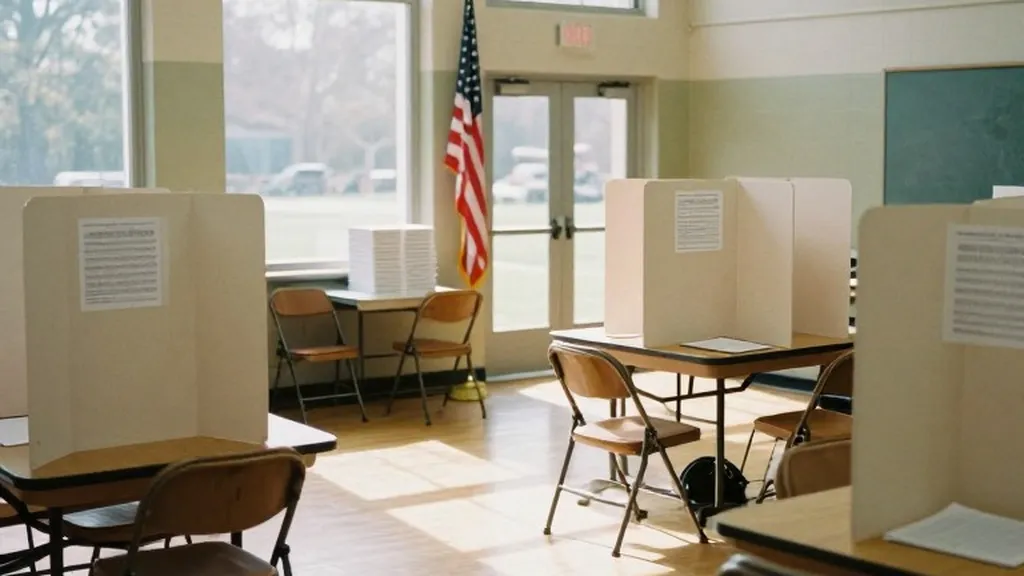
Voters in Manchester, Nashua, and Concord are heading to polling places on Election Day, Tuesday, November 3, 2026, to cast ballots for a new U.S. Senator, the state governor, and every seat in New Hampshire’s congressional delegation. New Hampshire polling hours vary by municipality, with polls required to open by 11 a.m. And not closing before 7 p.m. Local time. Residents can locate their specific polling place at vote.gov or through their local town clerk. The state’s ballot includes a special election for the U.S. Senate seat vacated by retiring Democrat Jeanne Shaheen, as well as a contest for governor where incumbent Republican Kelly Ayotte is running for re-election. Every U.S. House seat in the state is also on the ballot, along with state legislative races and local measures that vary by county.
Locally, the Senate race features Democratic Representative Chris Pappas against former Republican Senator John E. Sununu. This contest is particularly significant because New Hampshire voted for Vice President Kamala Harris in 2024 by a margin of 2.8 percent. In the governor’s race, voters are choosing between Ayotte and her Democratic opponent, with the Libertarian Party also appearing on the ballot. The outcome of these statewide races will shape the state’s representation in Washington for the next four to six years, while also influencing the balance of power in the U.S. Senate and the executive branch of the state government.
Nationally, the stakes are high as all 435 seats in the U.S. House of Representatives are up for election. Republicans currently hold 218 seats and Democrats hold 214, with one independent seat and some vacancies. Democrats need a net gain of three districts to secure a majority in the House, while Republicans can lose no more than two seats to maintain control. This narrow three-seat margin makes the election exceptionally tight, with one or two seats could tip either chamber. Sixty House incumbents, including 23 Democrats and 37 Republicans, did not run again, adding to the number of open seats that could shift the balance of power.
The election is being viewed as a referendum on President Donald Trump’s second term, with voters struggling with high prices and anger over an unpopular war with Iran. An AP-NORC poll indicates that 35 percent of U.S. Adults approve of Trump’s job performance, while 25 percent approve of his handling of the economy. About 7 in 10 respondents said the country is heading in the wrong direction, with most blaming the president for high prices. More than 57 million people had already voted as of Monday, surpassing the early vote of four years ago in many closely watched states. Republicans are bracing to lose the House while fighting to hold the Senate, and Democrats are described as cautiously optimistic about their chances.
Ballotpedia identifies 46 battleground districts in the House race, with 25 currently held by Democrats and 21 by Republicans. The data shows that 21 Democratic-held districts voted for Trump in 2024, while nine Republican-held districts voted for Kamala Harris. This overlap suggests that many voters are willing to split their tickets, potentially deciding the majority of the House. Six states, including California, Florida, Missouri, North Carolina, Tennessee, and Texas, are using new congressional maps after mid-decade redistricting. Ohio is also using a new map, and the Associated Press notes that these new districts may not vote as originally drawn, adding another layer of uncertainty to the national picture.
The U.S. Senate race includes 35 of the 100 seats, with Republicans holding 53 seats and Democrats holding 45, plus two independents who caucus with Democrats. Democrats need a net gain of four seats to take control of the Senate, while Republicans can lose only two to keep their majority. Eleven senators are not running again, including four Democrats and seven Republicans. The Associated Press highlights several key Senate matchups, including the race in New Hampshire and contests in states like Georgia, Ohio, and Michigan. In Alaska, the Trump administration filed a lawsuit related to the certification of the Senate result, adding a legal dimension to the election night proceedings.
The 2026 elections are likely to be the most expensive in history, with Republican committees outraising and outspending Democratic committees. This spending surge was helped by Trump-affiliated groups and contributions from Elon Musk. However, at the candidate level, Democrats outraised their opponents. An analysis of AdImpact data shows that 88.1 percent of Republican general election TV ad spending went to states and districts that Trump won in 2024, including more than $850 million in areas where he won by 10 points or more. This heavy spending in Republican-leaning areas reflects the party’s strategy to defend its base while trying to expand its margins in key districts.
Election administration has been a focal point of recent news, with a federal judge temporarily barring the Trump administration from carrying out a plan to prevent noncitizen voting. Critics argue that this move risks disenfranchising eligible voters and infringes on states’ authority over elections. A judge also ordered the administration to stop demanding that California election officials segregate ballots cast by people on lists of suspected noncitizens. The U.S. Postal Service added hours, staff, and special lines to ensure that mail ballots are counted on time. These administrative moves have heightened the attention on the accuracy and integrity of the vote, particularly in states that rely heavily on mail-in ballots.