New Hampshire voters weigh open Senate seat and 18-18 governor split
As polls open across Manchester and the state, residents decide on a vacant Senate seat and a governor's office in a national race that sees an even partisan split among the 36 contested governorships.
By Bianca Herrera ·
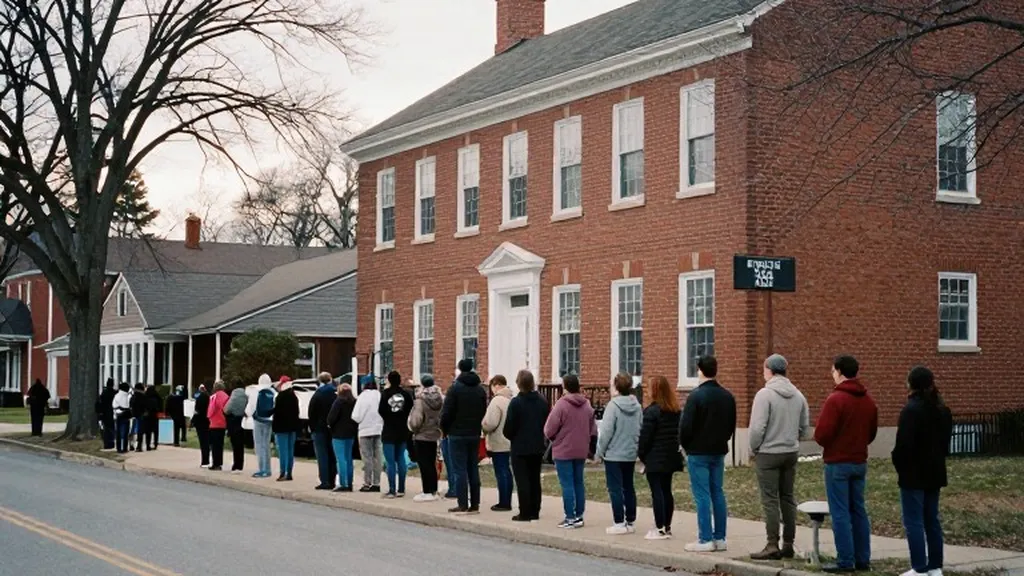
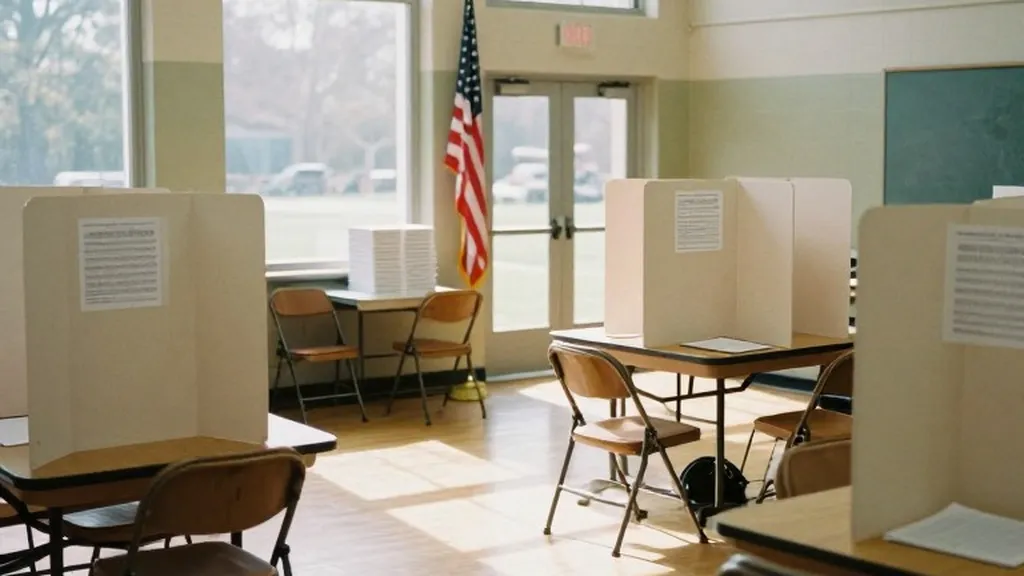
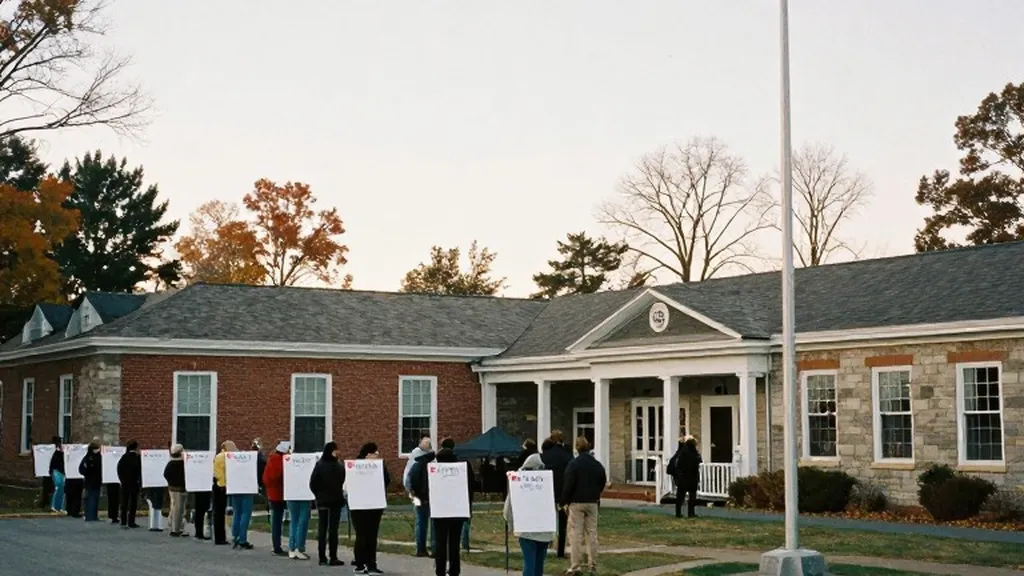
Voters in Manchester, Nashua, and Concord are heading to polling places today to decide the fate of New Hampshire's vacant U.S. Senate seat and the state's governor's office. New Hampshire polls must open by 11 a.m. And cannot close before 7 p.m., with specific hours varying by municipality. Residents can confirm their exact location and timing at vote.gov, a resource highlighted by the U.S. Government for election day preparation. The state's ballot includes races for every U.S. House seat, state legislative offices, and local measures that vary by county, ensuring that local decisions in towns like Manchester are part of a broader statewide and national picture.
The state's U.S. Senate race is particularly significant because it is an open seat, with no incumbent on the ballot. Ballotpedia notes that the parties on the ballot for this federal race are the Democratic and Republican parties. In the governor's race, incumbent Republican Kelly Ayotte is seeking re-election against Democratic and Libertarian challengers. This contest is part of a larger national trend where 36 governorships are up for grabs, creating a complex landscape for voters who are choosing between parties that currently hold an even number of these offices in the states where elections are taking place.
Nationally, the 2026 midterms feature a precise 18 to 18 split between Republicans and Democrats among the governorships currently on the ballot. Republicans hold 26 governor's offices and Democrats hold 24 heading into the election. However, in the 36 states holding elections today, each party controls exactly 18 of those seats. This parity creates a high-stakes environment where a net gain of two governorships would allow Democrats to claim a nationwide majority, a status Republicans have held since 2010. The outcome of these races will define the balance of power in statehouses across the country for the next two years.
A major complication in the governor's races is the number of open seats. 19 of the 36 governor races have no incumbent on the ballot. Fifteen governors are term-limited, preventing them from running for another term. Additionally, Iowa's Kim Reynolds, Minnesota's Tim Walz, and Wisconsin's Tony Evers chose not to seek re-election, while Rhode Island's Daniel McKee lost his primary. These open seats allow new faces to enter the race, but they also remove the advantage that incumbents typically enjoy in midterm elections, making the contests more unpredictable for both parties and their respective bases.
The Associated Press has identified nine governor races as battlegrounds: Alaska, Arizona, Georgia, Iowa, Kansas, Michigan, Nevada, Ohio, and Wisconsin. In these states, the margin of victory is expected to be close, and voters are weighing national issues alongside local concerns. Democrats are defending five governorships in states that Donald Trump won in the 2024 presidential election, including Arizona, Kansas, Michigan, Pennsylvania, and Wisconsin. Conversely, Republicans are defending two governorships in states that Kamala Harris won, specifically New Hampshire and Vermont. This cross-partisan defense highlights the competitive nature of the 2026 cycle in traditionally mixed political environments.
New Hampshire's governor's race is one of the two Republican-held governorships in states that voted for Harris in 2024, making it a key target for Democrats. The Associated Press notes that economic strain and tariffs have made states like Maine competitive, and similar economic concerns are likely influencing voters in New Hampshire. With the state's poll hours allowing for a late close, voters have until at least 7 p.m. To cast their ballots. The race features incumbent Kelly Ayotte, who is running for another term, against opponents from the Democratic and Libertarian parties listing for the state's general election.
The national mood is described by the Associated Press as a referendum on President Donald Trump's second term, with voters struggling with high prices and anger over an unpopular war with Iran. Polling from the AP-NORC center indicates that 35% of U.S. Adults approve of Trump's job performance, while 25% approve of his handling of the economy. About seven in 10 respondents say the country is heading in the wrong direction. This sentiment is likely affecting local voting patterns in New Hampshire, where residents are deciding not only on state leaders but also on the composition of the U.S. Congress for the final two years of the current presidential term.
In the U.S. Senate, 35 seats are up for election, including 33 regular elections and two special elections for the remaining terms of Marco Rubio and JD Vance. Republicans currently hold 53 seats, while Democrats hold 45, with two independents caucusing with the Democrats. Democrats need a net gain of four seats to achieve a majority in the Senate, a goal that is considered challenging given the current partisan split. The Associated Press notes that Kansas, a reliably Republican state, has become central to the fight for Senate control, with the race there rated as a toss-up to lean Republican by major tracking sites.
The U.S. House of Representatives is entirely up for election, with all 435 seats on the ballot. Republicans hold 218 seats and Democrats 214, with one independent and several vacancies. Democrats need a net gain of three districts to secure a majority, while Republicans can afford to lose no more than two. 46 battleground districts are counted, with 25 held by Democrats and 21 by Republicans. 60 House incumbents are not running again, a significant turnover that reflects the high stakes of this midterm cycle and the potential for new leaders to emerge in Congress.