Lula Claims Fourth Term with 51.79% of Brazil's Vote
The 80-year-old president reversed a first-round deficit to defeat Flávio Bolsonaro by roughly 4.3 million votes.
By Austin Reed ·
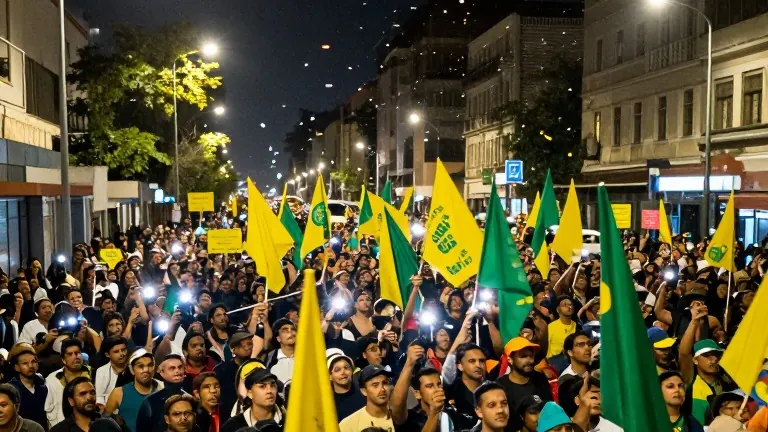
Brazil’s presidential election concluded with Luiz Inácio Lula da Silva securing 51.79% of the vote, a margin of approximately 4.3 million votes over his opponent. The 80-year-old incumbent defeated Flávio Bolsonaro, the far-right senator who received 48.21% of the total. The result was declared just after midnight UK time on Sunday.
Lula’s victory marks a dramatic reversal from the first-round results recorded in early October. In that initial ballot, Flávio Bolsonaro received 56.1 million votes compared to Lula’s 53.8 million. The first round saw Bolsonaro lead with 47.03% of the vote to Lula’s 45.16%. Polls tightened in the weeks following the first round, narrowing the gap to fractions of a percentage point before the final count.
The campaign saw a surge in digital mobilization for the incumbent. Millions of voters joined a WhatsApp channel known as “Lula’s army” to distribute supportive content. Lula, who recently took ownership of his first smartphone, began posting on Instagram and TikTok. His digital reach eventually surpassed that of Bolsonaro. The Bolsonaro campaign faced scrutiny over alleged unequal treatment by Meta, while a Piauí magazine report alleged Flávio Bolsonaro attended a boat party during the 2020 coronavirus outbreak.
Flávio Bolsonaro has refused to concede the result. He cited a decision to extend voting by two hours as a reason for his objection, though both candidates had requested the extension. Lula described the outcome as “a defeat for denialism.” The victory arrives two days before Lula’s 81st birthday.
The winner will serve in a presidency characterized by an environmental agenda. Under Lula’s previous four-year term, Amazon deforestation dropped by more than 70%. His administration also cracked down on illegal mining and supported Indigenous communities. However, he will now govern alongside a newly elected congress that includes a record number of right-wing politicians. These legislators are often hostile to Indigenous rights and environmental protections.
International leaders have begun congratulating Lula. The victory maintains Brazil’s current multilateral foreign policy stance. Lula has positioned himself as a defender against what he calls “colonial” designs by the United States. He has rejected invitations to join a Latin American coalition conducting military operations against drug cartels alongside the Pentagon. This approach limits greater US military involvement on Brazilian soil.
The election results were finalized in São Paulo, where crowds of supporters celebrated with fireworks. Tom Phillips, a Latin America correspondent, witnessed the celebrations and noted that the win consolidates the democratic resurgence in the country. The result stands as the fourth nonconsecutive term for the veteran leftist, who rose from rural poverty to become Brazil’s first elected working-class leader.
Source: The Guardian