Arab-led bloc holds balance of power in Israel's hung parliament
A record turnout for Palestinian citizens of Israel has left both major blocs short of a majority, forcing complex coalition negotiations.
By Austin Reed ·
The recent Israeli election has left the country without a clear governing majority, elevating the political influence of Palestinian Arab parties to a level not seen in decades. Both Prime Minister Benjamin Netanyahu’s far-right coalition and the center-right opposition led by Gadi Eisenkot failed to reach the 61-seat threshold required to form a government in the 120-seat Knesset. This stalemate places the 19 seats won by Arab-led parties at the center of the upcoming coalition talks.
According to the Central Elections Committee, Arab-led parties saw a 64 percent increase in votes compared to the previous election. This surge in participation is a sharp reversal from recent years when many Palestinian citizens of Israel abstained from voting. Jamal Zahalka, chairman of the High Follow-Up Committee, described the result as a historical achievement. He stated that the community blocked the continuation of Netanyahu's government and found its strength in the ballot box.
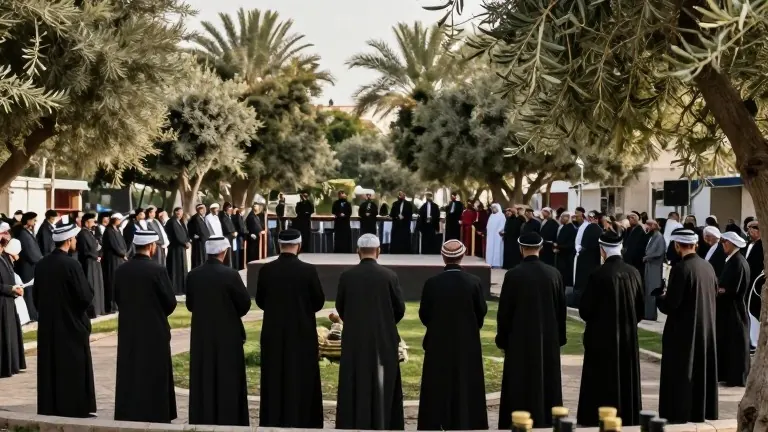
The election outcome reflects deep tensions regarding the role of Palestinian Arabs in Israeli society. In the town of Kufr Qasim, residents marked the 70th anniversary of the 1956 massacre where border police killed local residents. Speakers noted that while the community mourns past losses, the current political climate remains unresolved. Many voters cited worsening rights and discrimination since the October 7, 2023 attacks as primary reasons for their return to the polls.
Intisar Sarsur, a 65-year-old resident of Kufr Qasim, said there is no freedom anymore and that she seeks basic human rights. She noted that nearly everyone in her social circle participated in the election. The community gathered in a park to share food and discuss the results, a moment she described as bittersweet due to the ongoing conflict in Gaza and the occupation of the West Bank.
Netanyahu’s camp has reacted with skepticism and alarm. On election day, Netanyahu posted a video calling the high Arab turnout an emergency. Itamar Ben Gvir, the far-right national security minister, appealed to voters to ensure the country remains Jewish and Zionist. Likud party members later claimed the election was stolen through bribery and forgery, a charge for which they have not released public evidence. Police and election officials have stated they found no basis for widespread fraud, although the elections committee head asked the Shin Bet to investigate suspected foreign funding.
The political calculus is complicated by the fact that Eisenkot is not a natural ally for Arab parties. A former military chief of staff, Eisenkot lost his son in the Gaza war and formulated the Dahiyeh doctrine in 2008. This strategy advocates for disproportionate force against areas from which militants fire. His hawkish background makes an alliance with Arab parties politically risky for the right wing, who fear it signals a shift in Israel's identity.
Arab parties are themselves divided on how to wield their new power. The socially conservative Ra'am party campaigned on joining a governing coalition and included a Jewish former police official on its list. In contrast, the Joint List alliance, which won 11 of the 19 Arab-led seats, has said it will not formally partner with Eisenkot. Its leaders cite the ongoing war in Gaza and the occupation of the West Bank as reasons to support his government from the outside rather than join it.
President Isaac Herzog is currently consulting with parties to determine who will receive the mandate to form a coalition. He is expected to announce the selected candidate next week. That candidate will have 28 days to build a government, with the option to request a two-week extension. If they fail, the next candidate in line will have only 28 days without an extension. If no coalition is formed, Israel will hold repeat elections next year.