Paxton and Talarico Battle for Texas Senate Seat as Trump Shifts to Phone Rallies
With early voting nearing 50 million ballots, the president bypassed in-person stops in favor of six scheduled calls across five states.
By Austin Reed ·
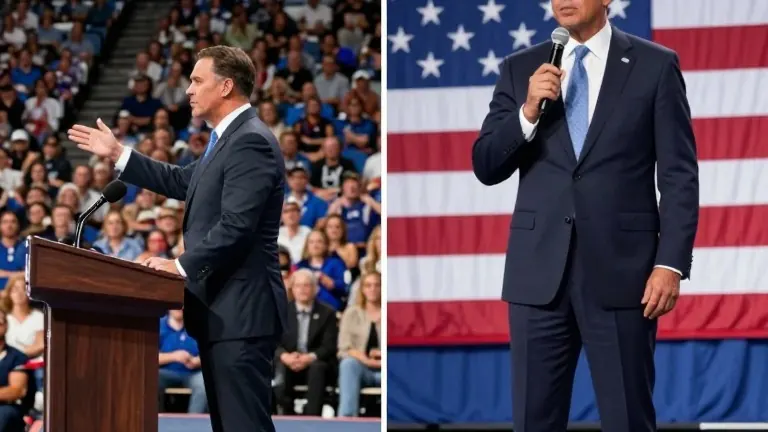
The Texas U.S. Senate race between Republican Ken Paxton and Democrat James Talarico has become a central measure of voter sentiment toward President Donald Trump’s leadership. The contest, previously viewed as a secondary midterm contest, is now a key indicator of public frustration with the Republican Party’s loyalists. Both candidates began their final campaign arguments on Saturday, with Paxton in Fort Worth and Talarico in Houston.
Talarico, a state lawmaker and former teacher, characterized Paxton, the longtime state attorney general, as a symbol of a corrupt political system. Talarico, who holds Trump’s endorsement, has navigated recent indictment and impeachment processes. In Houston, Talarico framed the election as a choice between a senator who benefits voters financially or one who benefits himself. He stated, “This election is about whether you want a senator who puts money in your pocket or who puts money in his own.”
Paxton countered in Fort Worth by positioning Talarico as too liberal for Texas. Paxton, who defeated incumbent Sen. John Cornyn in the GOP primary with Trump’s assistance, argued that Talarico would serve as a subordinate to Senate Democratic Leader Chuck Schumer. Paxton warned that the left is becoming increasingly radical. He stated, “The left in this country keeps getting more and more radical.”
The financial disparity between the candidates is a focal point of the race. Elon Musk, the world’s richest man, has spent more than $150 million of his own funds to assist Paxton in keeping pace with Talarico’s fundraising. Talarico described the campaign as a David versus Goliath scenario, noting that the people of Texas are his slingshot.
President Trump shifted his campaign strategy on Saturday, moving from in-person rallies to virtual events. After spending the morning and early afternoon at a golf club in West Palm Beach, Florida, he was scheduled to call into six tele-rallies. The MAGA Inc. super PAC organized calls for races in Pennsylvania, Ohio, New York, Michigan, and two separate calls for Florida. Trump posted on his social media site, “Answer your phones, and ENJOY!” This approach marks a departure from his usual rally speeches, which often exceed 90 minutes.
The president plans to hold rallies in Iowa and Kansas on Sunday, events that were previously rescheduled. Early voting totals were approaching 50 million heading into the weekend, a figure that contrasts with the roughly 112 million votes cast in the 2022 midterm elections.
In Virginia’s 2nd Congressional District, House Minority Leader Hakeem Jeffries campaigned with former Rep. Elaine Luria. Luria is seeking a rematch against Republican Rep. Jen Kiggans, who defeated her four years ago. Jeffries pledged to hold votes on reversing healthcare cuts and limiting Trump’s military actions on Iran if Democrats win a majority. He specifically targeted Pete Hegseth, the Pentagon chief, stating, “In the majority, one of the first things we are going to do is run Pete Hegseth out of town.”
House Speaker Mike Johnson campaigned in a Michigan district, describing the election as a spiritual battle. Johnson characterized Democrats as Marxists, socialists, and communists, arguing that their ideology led to the deaths of millions in the 20th century. Meanwhile, Trump engaged in anti-Muslim rhetoric regarding Michigan Democratic Senate nominee Abdul El-Sayed. The president posted a cartoon on social media depicting a man with a flaming torch knocking on the door of the United States.
Paxton urged Republicans to match Democratic early voting turnout, warning that losing Texas would mean losing America. He concluded his remarks by asking voters to pray for Texas and for him. In Michigan, internal divisions persist within the Democratic Party. Abdul El-Sayed’s campaign is no longer welcoming former primary rival Haley Stevens to events, according to a person familiar with the matter. Stevens has demanded that El-Sayed condemn an advertisement linking U.S. support for Israel to rising grocery prices.
Republicans currently hold a 53-47 advantage in the Senate. Democrats require at least four new seats for a majority, or five if they lose the Michigan race. El-Sayed, campaigning in Sterling Heights, said the party should keep money in the United States to invest in schools and infrastructure rather than sending it abroad to drop bombs. He noted that his former rivals’ spending in the primary was effectively wasted because his side won the seat.