New Hampshire flips to Democrats in state and federal races
Democrats seized control of the state legislature and both congressional seats, contributing to a national House margin of 238-146.
By Bianca Herrera ·

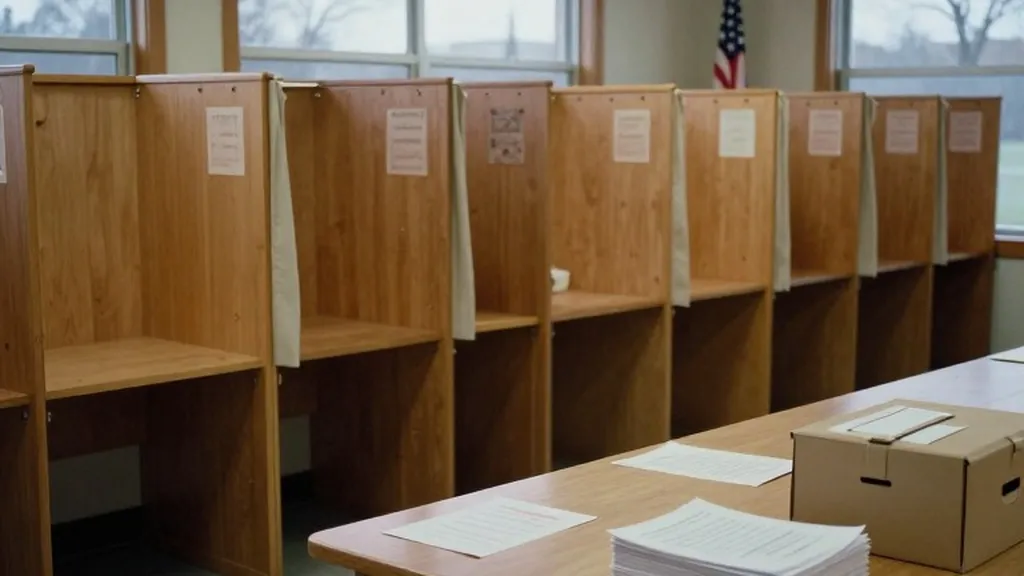
Manchester, Nashua, and Concord voters cast decisive ballots on Tuesday, November 3, 2026, ending the Republican trifecta in New Hampshire. The state now faces a divided government after Democrats won control of both the state House and the state Senate. These victories were projected by State Navigate and confirmed in early Wednesday updates from Ballotpedia.
The shift in state power aligns with a broader trend across the state's two U.S. House districts. Democrats captured both seats in the state's congressional delegation, marking a complete turnover in federal representation from Manchester to Concord. This result places New Hampshire among the states that shifted significantly toward the Democratic Party during the midterm elections.
In the state Senate race, the Republican incumbent Kelly Ayotte faced a competitive challenge, but the legislative body flipped to Democratic control. The state House also went to the Democrats, solidifying their presence in the statehouse in Concord. This change means that state officials in Manchester and the surrounding Merrimack Valley towns will work under a unified Democratic leadership in both legislative chambers for the next two years.
The national picture reflects this local momentum. As of 8:52 PM ET on November 5, Democrats had won 248 U.S. House races while Republicans won 150. Thirty-seven races remained uncalled at that time, with eight previously held by Democrats and twenty-nine by Republicans. This tally gives Democrats a commanding majority in the lower chamber of Congress.
Before the election, Republicans held a 220-215 majority in the U.S. House, with three vacancies. Democrats needed to gain a net of three districts to win a majority. Instead, they gained a net of 33 seats, a dramatic swing that swept aside the Republican strategy to reshape House districts across the country. The unprecedented national Republican effort to maintain their seat count failed as the Democratic wave hit with full force.
In the U.S. Senate, Democrats also made significant gains. As of 10:29 PM ET on November 5, Democrats had won 20 of the 35 U.S. Senate races, while Republicans won 13. Two races remained uncalled. Seven seats changed party control, all moving to the Democratic column. This result ensures that Democrats will win control of the U.S. Senate, a projection that was made by Decision Desk HQ on November 3.
The shift in congressional control has immediate implications for the national agenda. Senior Democrats have vowed to use their new subpoena powers to investigate what they describe as corruption within the Trump administration. Rep. Hakeem Jeffries of New York, who is in line to become House speaker, has not ruled out impeachment proceedings. This oversight agenda is expected to be a central focus for the new majority starting in January.
For voters in New Hampshire, the election results signal a departure from the previous political landscape. The state's two House members will join a Democratic majority in Washington, D.C., while state legislators in Manchester and Concord will have the power to advance their own policy priorities. The end of the Republican trifecta in New Hampshire is part of a national pattern where voters expressed dissatisfaction with the current administration.
The election also saw historic firsts, including the election of Abdul El-Sayed as the first Muslim American U.S. senator. While his race was in Michigan, his victory resonated across the country, including in New Hampshire, where voters also elected a diverse slate of representatives. The national results show a clear preference for change, with Democrats gaining seats in the House, the Senate, and state legislatures nationwide.
The final tallies confirm that the margin of victory in the U.S. House is 238-146, based on called races. This large margin provides Democrats with the flexibility to pass legislation and conduct investigations without the constant threat of a procedural veto. In New Hampshire, the new balance of power will shape the state's approach to federal cooperation and local governance for the next two years.
The election results were compiled from official calls and projections released on November 5, 2026. The data shows that Democrats gained a net of 33 seats in the House, a net of 7 seats in the Senate, and a net of 11 seats in state legislative chambers. This comprehensive sweep marks one of the largest midterm shifts in recent history, with New Hampshire playing a key role in the state-level changes.