Iran claims four tankers destroyed by mines in Strait of Hormuz
The Islamic Revolutionary Guard Corps says vessels hit prohibited routes after US strikes, while Washington faces pressure from midterm election losses.
By Austin Reed ·
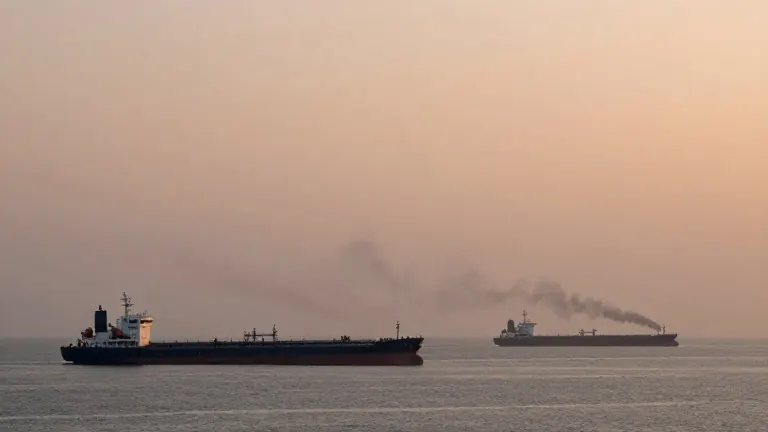
Oil shipments through the Strait of Hormuz face new disruption as Iran's military announced the destruction of four tankers by naval mines on Wednesday, November 4. The announcement comes one day after United States forces conducted strikes against Iranian targets, escalating tensions in a region critical to global fuel supplies.
Tasnim, a semi-official Iranian news agency, reported that two of the damaged vessels remained on fire while the other two were seized by Iranian forces. The Islamic Revolutionary Guard Corps stated that the ships had attempted to traverse a prohibited route in the southern section of the waterway. The BBC noted that it had not independently verified these claims.
Earlier on Tuesday, the same military body reported that mines had damaged three tankers and that its forces had downed an MQ-9 drone over the strait. These incidents followed American strikes on Qeshm, which Iranian officials said were a response to earlier IRGC fire directed at a US aircraft.
US President Donald Trump acknowledged on Tuesday that the ongoing conflict and rising petrol prices contributed to the poor performance of Republican candidates in the midterm elections. Speaking to CBS News, Trump said the war would end only when he decided it should. He maintained that he did not regret initiating the conflict despite the political fallout.
Iran's parliamentary speaker, Mohammad Bagher Ghalibaf, interpreted the election results as a public rejection of war. Writing on X, he stated that Americans opposed the conflict due to living costs or conscience, a sentiment Iran endorsed. Ghalibaf warned Washington against ignoring this public mood and threatened consequences if it did.
Negotiations to end the conflict, which began with joint US-Israeli strikes in February, have stalled after months of deadlock. Ghalibaf told parliament on Tuesday that Iran would not surrender and that preventing war remained Washington's responsibility. He warned that another US strategic error could open a different battlefield.
Iranian President Masoud Pezeshkian said his government sought dialogue to resolve the crisis, arguing that renewed fighting would benefit no one. Iran has kept the Strait of Hormuz closed following the attacks, stating that reopening depends on the US accepting its peace demands. Foreign ministry spokesperson Esmaeil Baghaei said this week that Iran's seven-step proposal had been condensed and could be executed within two days if Washington agreed.