
Arkansas farm bankruptcies surge as crop receipts fall sharply
Chapter 12 filings have doubled in 2026, driven by low commodity prices and higher input costs that are outpacing state revenue gains in livestock.
By Austin Reed ·
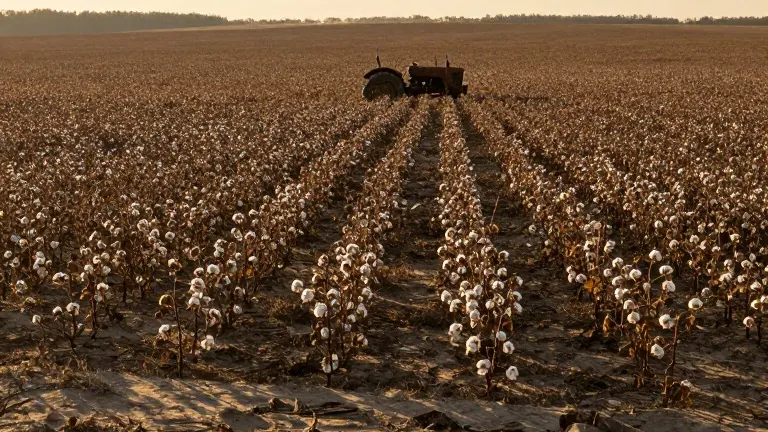
Arkansas farm families are facing their most severe financial downturn in years, with bankruptcy filings rising sharply and crop income collapsing in the first nine months of 2026.
A recent agricultural profile indicates that crop cash receipts, which typically generate approximately $20 billion for the state economy annually, dropped 17.4% compared to the previous year. This decline stands in contrast to the livestock sector, where receipts from animals and animal products actually increased by 1.2%. The divergence suggests that the current crisis is disproportionately affecting plant-based agriculture rather than the entire rural economy.
Frank Seo, co-author of the profile and an assistant professor of rural development at the University of Arkansas Division of Agriculture, noted that the aggregate figures mask severe variations within specific crop categories. Soybean receipts fell by 29.8%, while cotton lint receipts dropped 40.6% and corn receipts declined 17.3%. Rice was the exception, with cash receipts rising 6.5%.
The financial strain is evident in legal records. Arkansas recorded 12 Chapter 12 bankruptcy filings in the third quarter of 2026, a figure that is double the six filings reported in Iowa, the state with the next highest count. Harrison Pittman, director of the National Agricultural Law Center, stated that 32 agricultural operations in Arkansas have filed for Chapter 12 protection so far this year. This pace exceeds the 33 filings recorded in all of 2025, which had already more than doubled the previous year's total.
Nationally, the trend mirrors the state's experience. Federal court data show 292 Chapter 12 cases filed in the first three quarters of 2026, representing a nearly 19% increase over the 246 filed in the same period of 2025. In the third quarter alone, 91 such farm-specific bankruptcies were recorded, alongside 201 farm-related filings under the broader Chapter 11 classification.
Contributing factors include a combination of external pressures and internal market shifts. Tariffs and trade wars have restricted export markets, while weather events ranging from floods to droughts have damaged yields. Higher input costs, particularly fertilizer prices driven by the conflict in Ukraine and diesel prices affected by tensions in Iran, have further squeezed margins. Estimates suggest that nearly 25% of farms in Arkansas have closed in the last 18 months.
The data points to a structural imbalance where rising costs are not being offset by crop revenue. While livestock remains stable, the sharp decline in soybean, cotton, and corn income is pushing operations toward insolvency. The state currently leads the nation in farm bankruptcies, a position that has persisted through the 2025 and 2026 periods.
The situation has prompted calls for coordinated policy responses. Critics of the current approach argue that the lack of a unified strategy is allowing community banks, which serve as the primary financial safety net for rural areas, to absorb increasing risk. The disparity between the growing livestock sector and the shrinking crop sector indicates that targeted intervention may be required to stabilize the overall agricultural economy.
More Business · Bad Service · Report a business · Got a Story?