Ukraine fights Russia in gas pipes
Kyiv troops advanced 15 kilometers through a 1.2-meter tunnel to seize control from Moscow forces.
By Austin Reed ·
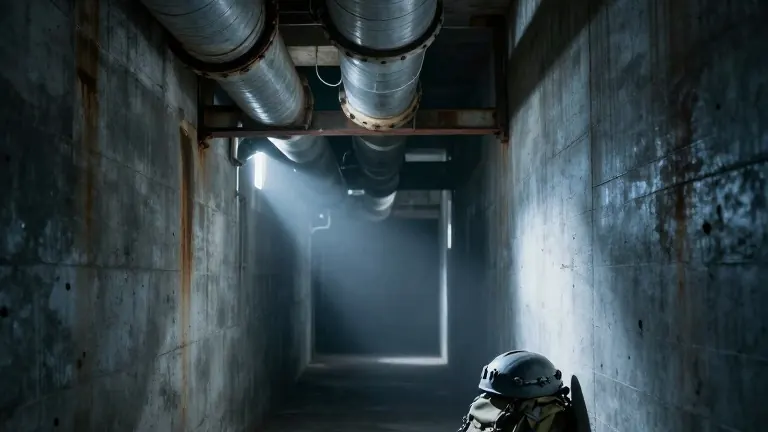
Ukrainian President Volodymyr Zelensky declared Operation Veles a great success last week. The campaign involved troops moving deep inside a disused gas pipeline in the Kupiansk region. This marked a shift in tactics for the Ukrainian army. They now fight in the same underground spaces Russia used for two years.
The New York Times reported at the end of October that the new front has opened beneath the earth. For almost two weeks, the Ukrainian army showed Western media the conditions in the tunnel. The pipeline passes beneath the Oskil River and into the frontline city. Russian forces have fought to capture Kupiansk for months.
Zelensky stated that specially trained soldiers advanced 15 kilometers along the pipeline. The tunnel has a diameter of just 1.2 meters. During the fighting, troops eliminated about 100 Russian soldiers. They also took more than 30 prisoners. The president claimed the method modernized and sophisticated the original Russian technique.
Huseyn Aliyev, a specialist at the University of Glasgow, noted that Ukrainians are now using Moscow's methods. He said Russians started using these tunnels first. This is the first time he knows of Ukrainians adopting the same approach. Will Kingston-Cox of the International Team for the Study of Security cited Avdiivka in January 2024. Russian troops reached the rear of Ukrainian positions through a drainage conduit there.
Ryhor Nizhnikau of the Finnish Institute of International Affairs explained the infrastructure. Soviet-era gas pipelines once carried Russian gas to Europe. These networks exist in Kharkiv, Luhansk, Donetsk, and parts of Zaporizhzhia. He described the battlefield as smaller in scale but more intensively used over the past year. Gustav Gressel from Austria's National Defence Academy added that sewage systems in cities also serve as battlefields.
Both sides rely on these tunnels because drones saturate the surface. Kingston-Cox said open ground allows reconnaissance drones to spot groups early. Nizhnikau said the constant drone threat makes tunnels more predictable. Soldiers know their enemy is ahead in the tunnel. There is no unexpected attack from the skies. Gressel noted that radio-controlled drones lose signal at the entrance. Fiber-optic drones often snag their cables in corners.
Nizhnikau emphasized that tunnel warfare is a support measure. It cannot replace the main fight on the surface. Aliyev agreed that the front line lacks such infrastructure in many places. Kingston-Cox said a narrow pipe can deliver infantry but has limited capacity. A defender watching the opening can make emerging soldiers vulnerable. The tactic helps break local deadlocks rather than launch large offensives.