Tennessee District 4 flips blue by fewer than 500 votes
A narrow margin in a gerrymandered middle Tennessee district offset Republican gains in new Memphis districts, leaving the state's congressional balance unchanged despite a tight gubernatorial race.
By Austin Reed ·
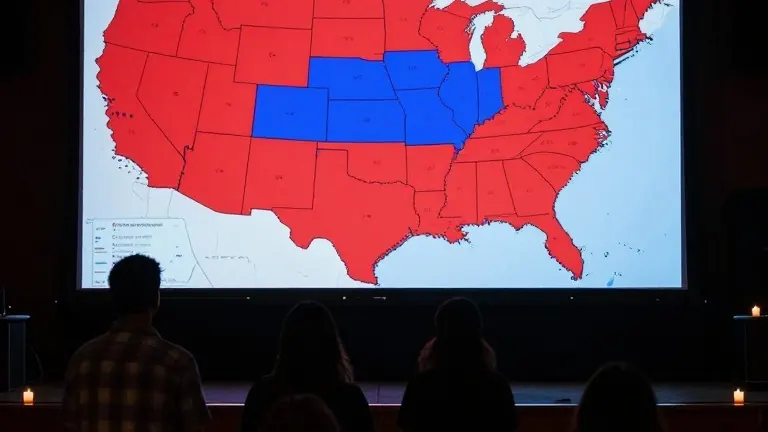
Tennessee voters narrowly elected a Democrat to the congressional seat for District 4 in a result that defied expectations in a deeply conservative state. The margin of victory was reported to be just a couple of hundred votes, a figure that has not yet been certified. This outcome effectively canceled out the single seat Republicans had sought to gain through newly drawn district maps, resulting in no net change in the state's congressional representation.
The shift occurred in a region that includes Murfreesboro and Pulaski, areas traditionally dominated by Republican voters. The closeness of the race in this middle Tennessee district signaled a tangible change in voter sentiment. Analysts noted that the result stands in contrast to the rest of the state, where Republican candidates held firm despite a contentious political environment.
Political analyst Otis Sanford identified the tight race as a key indicator of voter fatigue. He stated that the policies enacted by the federal administration and supported by state leadership had worn thin among residents. Sanford observed that the closeness of the gubernatorial election, decided by approximately 6 percentage points, further illustrated that Tennesseans were dissatisfied with the current political trajectory.
Republican Marsha Blackburn secured the governorship after trailing for much of the election night. The final margin was significantly smaller than pre-election polls had predicted, which had shown a double-digit lead. Blackburn declared in her victory speech that the state had chosen a specific direction, a statement Sanford argued was misaligned with the clear preference of voters for a change in course.
In the three new congressional districts carved out of Memphis, Republicans retained control but with narrower margins than anticipated. Charlie Hatcher won District 5 and Brent Taylor won District 9. Although the district maps were drawn to favor Republican candidates, the victories in these three seats were described as close contests rather than the dominant wins the party had hoped for. David Kustoff also faced a tight race against Democrat Heidi Kuhn.
The final tally for the state legislature remained a Republican supermajority, but the congressional results complicated the party's strategic outlook. Sanford noted that the gerrymandering process created confusion and anger among voters, particularly regarding the single seat Republicans aimed to capture. With the District 4 result, the net gain for Republicans was zero, leaving the party without the additional seat it had projected under the new maps.
Turnout in Shelby County was lower than necessary for either major party to secure comfortable wins in the local races. This factor contributed to the uncertainty surrounding the final outcomes. The results suggest that the political balance in Tennessee may be more fragile than previously assumed, with the potential for further shifts in the 2028 election cycle if current trends continue.