Morrison skis Everest's north face after partner dies
Jim Morrison completed a historic ski descent in October 2025, finishing a project he and Hilaree Nelson conceived before her death in 2022.
By Austin Reed ·
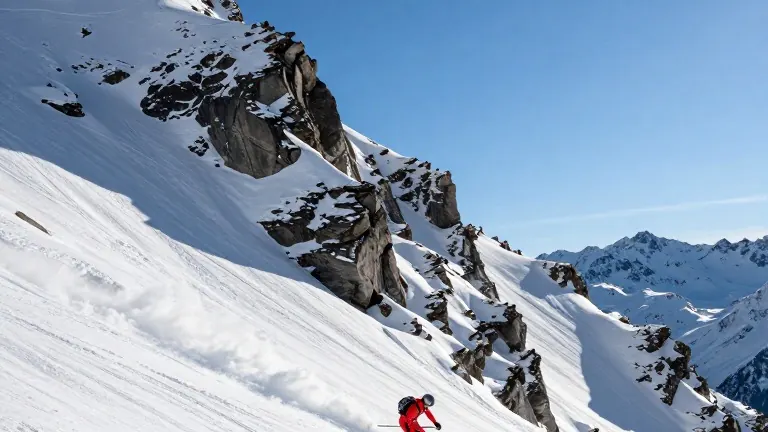
Jim Morrison became the first person to ski down the north face of Mount Everest in October 2025. He reached the summit on Oct. 15, 2025, after a seven-week expedition. The descent took four hours and five minutes. The feat was the final step in a plan Morrison and his late partner, Hilaree Nelson, had developed together.
Morrison and Nelson met in 2015 while climbing Makalu. They began a romantic relationship in 2017. The pair planned to climb the direct north face of Everest and ski down. The route is a steep, 9,000-foot line. It is considered the most technically difficult path on the mountain. The north face is less traveled than the south side, which has seen more than 7,500 summits.
The plan changed in September 2022. Nelson and Morrison were climbing Mount Manaslu in Nepal when an avalanche struck. Nelson died. The event halted their initial expedition. Morrison had previously lost his wife and two children in a plane crash in 2011. He took a seven-month break from filming before deciding to continue the project. He stated he wanted to complete the goal for Nelson's legacy.
Documentarians Elizabeth Chai Vasarhelyi and Jimmy Chin captured the journey. Chin, a close friend and experienced climber, replaced Nelson as Morrison's climbing partner. Vasarhelyi noted that the decision to continue created a conflict between professional interest and personal responsibility. The couple was married during filming and divorced in 2025. The film, titled Everest: The Other Side, premiered at the Venice Film Festival. It opened in theaters on Oct. 30, 2026.
The 2024 attempt failed due to weather and injury. Climber Yukta Gurung broke his leg during the ascent. The team called off the expedition. Gurung recovered and returned for the 2025 attempt. The 2025 team included 12 climbers. They established an advanced base camp at 18,100 feet. They used rotation climbs to acclimatize and move equipment. The process involved repeated trips to higher altitudes to build red blood cell counts.
On Oct. 15, 2025, the team reached the peak at 29,031 feet. Morrison spent 45 minutes on the summit. He scattered some of Nelson's ashes. He then prepared his skis. The transition took longer than expected due to the altitude. He told his team, including Chin, that they were proceeding.
Morrison described the descent as the hardest ski run of his life. He navigated the steep face alone. The run included many stops to manage fatigue and oxygen levels. As he descended, the air became richer in oxygen. This allowed him to recover more quickly. He reached the bottom of the glacier in tears. He described the moment as a tidal wave of emotions.
Morrison credited the team for the success. The summit team included Carla Perez, Esteban Mena Yanez, Pasang Sona Sherpa, Pemba Sherpa, Roberto Morales, Erich Reopke, Nigma Tenjing Sherpa, Pemba Gelje Sherpa, Pur Bahadur Gurung, and Tenging Gyaljen Sherpa. Morrison said the achievement was a team effort. He felt he and Nelson accomplished the goal together. The documentary shows the physical demands of the climb and the emotional weight of the loss.