Flat-topped mountains have served as fortresses and film sets for centuries
Geological erosion created the mesas of the Southwest, which Native peoples used for defense and which Hollywood later turned into iconic backdrops.
By Austin Reed ·
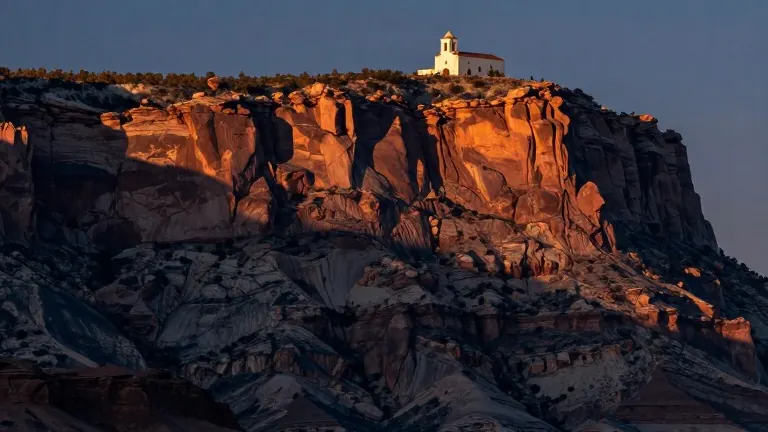
The mesas of the American Southwest are flat-topped mountains formed by millions of years of erosion from gravity and wind. Spanish explorers named the landforms "mesas," the Spanish word for tables, when they first encountered them. These geological features have served as natural fortifications for Native Americans, who used the steep sides and high vantage points to protect their communities from outside threats.
Old Oraibi, a Hopi village in northern Arizona, sits on a mesa and is considered the oldest continuously inhabited community in the United States, dating back to 1150. Acoma Pueblo, known as Sky City in New Mexico, is another ancient settlement. Its mesa stands 365 feet high. The San Esteban del Rey Mission was built on that same mesa between 1629 and 1640. All construction materials, including the earth used for the cemetery, were carried up the steep slopes by foot.
These landscapes have also shaped American culture and history. Director John Ford used the red mesas and buttes of Monument Valley in Arizona as backdrops for "Stagecoach" and other Western films. Stanley Kubrick used the same location in "2001: A Space Odyssey" to depict an alien landscape when astronaut Dave Bowman passes through the Stargate.
Real-world history has also been made on these flat tops. Robert J. Oppenheimer selected the Los Alamos mesa in New Mexico as a secret site to assemble elite scientists. Their work there led to the development of the atomic bomb. Nuclear research continues at the Los Alamos Scientific Laboratory today.
Hernando de Alvarado, part of the Coronado expedition, arrived at Acoma Pueblo in 1540. The village had existed for centuries before his arrival. The landforms continue to hold spiritual significance for the original inhabitants of these regions.
This piece is part of a recurring series marking the 250th anniversary of the United States. The series, titled "American Objects," examines various elements of American identity.