Bedouin voting surge in Negev shifts Israeli election results
Turnout among Bedouin voters in southern Israel rose to historic levels, securing 19 seats for Palestinian-led parties and ending Benjamin Netanyahu's majority.
By Austin Reed ·
Voting rates in Bedouin communities of the Negev region reached as high as 93% in Tuesday's Israeli election, a surge that secured 19 seats for Palestinian-led parties in the Knesset. The turnout was critical in stripping Prime Minister Benjamin Netanyahu and his coalition of a governing majority. The lowest recorded turnout in any Bedouin community was 62%, a sharp increase from previous elections. There are approximately 180,000 eligible Bedouin voters in the region.
The rise in participation was driven by a grassroots campaign led by the Alnashmiat network. Activists focused on educating Bedouin women about their voting rights and logistical needs. In the 2022 election, women's turnout was around 20%. Informal data from this week's vote suggests that figure exceeded 60% in unrecognised villages. Israel does not publish official gender breakdowns for national elections.
Umm Khaled Fatoum, a resident of the Bedouin village of Azzarnug, participated in the mobilization efforts. Last year, bulldozers demolished her son's house under police escort. The crew removed the structure without allowing the family to save furniture or solar panels. Fatoum said her primary goal was to vote for candidates who would challenge Itamar Ben-Gvir, the national security minister who ordered the demolitions.
Ben-Gvir has publicly boasted about the mass destruction of Palestinian and Arab homes. Fatoum stated that no family in the Bedouin community has escaped the effects of his campaign. The activists worked to overcome cultural and practical barriers to voting. Many women in unrecognised villages did not know they had the right to vote in national elections because they could not vote in municipal ones.
Logistical challenges required creative solutions. There are no polling stations in unrecognised villages, forcing voters to travel to nearby towns. Journeys could take up to an hour in each direction. Men traveled by camel, horse, donkey, or bicycle. Jewish women volunteers provided rides to Bedouin women, although a 2019 ruling deemed organised transport volunteers illegal. Voters and drivers therefore coordinated individually.
Raluca Ganea, the founding executive director of the Jewish-Arab group Zazim, said hundreds of women volunteers helped Bedouin women reach the polls. About 150 men also attended polling stations to provide a protective presence. Ganea explained that having Jewish men present was intended to de-escalate potential right-wing provocations. This reduced the likelihood of Bedouin men being arrested or injured if police intervened.
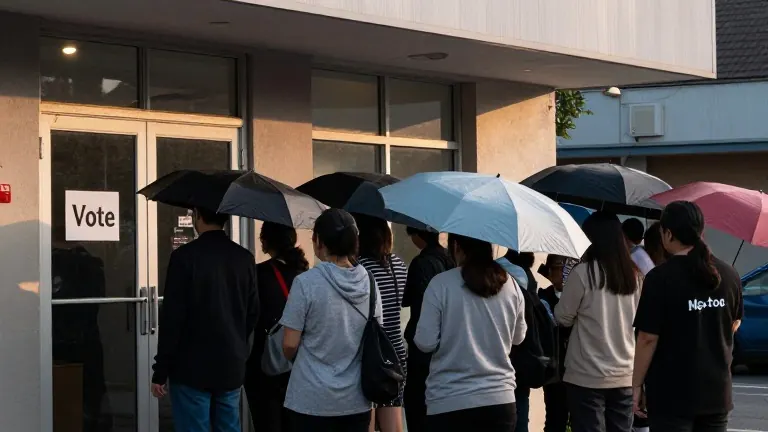
Netanyahu's campaign used social media to target Bedouin voters, including AI-generated images of crowded polling stations. His team accused Palestinian-led parties of fraud and foreign support to explain the high turnout. Amit Segal, a confidant of the prime minister, called the increase in Bedouin turnout unprecedented in the state's history. Opposition leaders and election organisers rejected these allegations.
Amira Habdoubi, an organiser from Abu Talul, described the high turnout as a result of awareness rather than corruption. She noted that voting serves as a primary method of political expression for a community with limited avenues for protest. The Muslim Bedouin are a marginalised minority, with many villages deemed unrecognised by the state. These areas often lack electricity and water, and the majority of the Negev is designated for military training.
The election outcome reflects the political weight of the Bedouin vote in the current climate of regional conflict. War poses specific risks to unrecognised villages, which lack bomb shelters and warning sirens. Six of the 36 children killed in the attacks of October 7 were from Bedouin villages. The surge in votes aims to influence future government policy on security and civil rights.
Hanan Alsanah, a lawyer and activist with Alnashmiat, said the campaign demonstrated the power of combined community effort. She stated that men and women, Arab and Jewish citizens, should continue to work together. The network intends to bring this collaborative approach to the new parliament to help rebuild the state.